
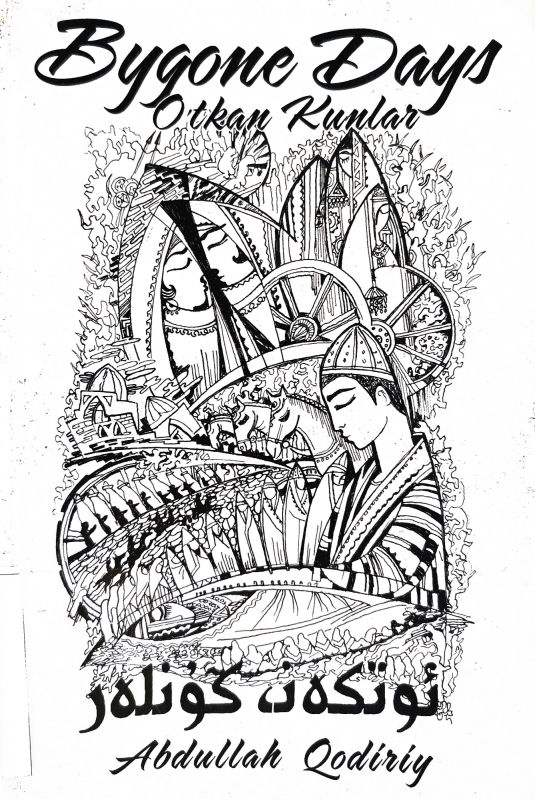
O'TKAN KUNLAR
Revolution and diminishing hope. Memory and loss. Muslim values and modernity. Even in 1926, Abdullah Qodiriy struggled with these issues, so much so that they became central to O’tkan Kunlar, his Uzbek language masterpiece.Set twenty years before Ts...Читать полностью
О книге
Revolution and diminishing hope. Memory and loss. Muslim values and modernity. Even in 1926, Abdullah Qodiriy struggled with these issues, so much so that they became central to O’tkan Kunlar, his Uzbek language masterpiece.Set twenty years before Tsarist Russia’s conquest of Tashkent, the beloved characters of the novel Otabek, Kumush, Yusufbek Hajji, and Uzbek Oyim, pose as surrogates in the author as he navigates the historical, political, and cultural landscape of Turkistan. The book’s hero attempts to reconcile the need for societal reform while maintaining loyalty to his own identity, faith, and ecumenical community.Published to great acclaim, the author brought a modern novel to a traditional society increasingly alienated by the countervailing political forces wracking Central Asia. Qodiriy belonged to a Muslim reform movement known as the Jadids who sought to modernize their society in the hope of achieving self-rule in the face of Russian colonization and subsequent Soviet homogenization.This controversial novel’s original text was banned soon after its publication with only heavily censured versions printed after Qodiriy’s murder under Stalin’s purges in 1938. The ideas espoused in what is now Uzbekistan’s national narrative — perhaps its origin story — hold direct corollaries to the very questions we ask today regarding the role of faith, the role of gender, the role of government in society. Many describe this novel as a guide to the same issues that Uzbek society contends with today.Translated over a fifteen-year period from the original text by Mark E. Reese, the novel boasts 400 explanatory notes that provide historical, geographic, and cultural reference points to readers not familiar with the region, or those wishing to better understand their own past.